One of the most common questions we hear in CPR classes is:
“If Hands-Only CPR works, do I really need to learn rescue breaths?”
Let’s clear that up.
The Myth
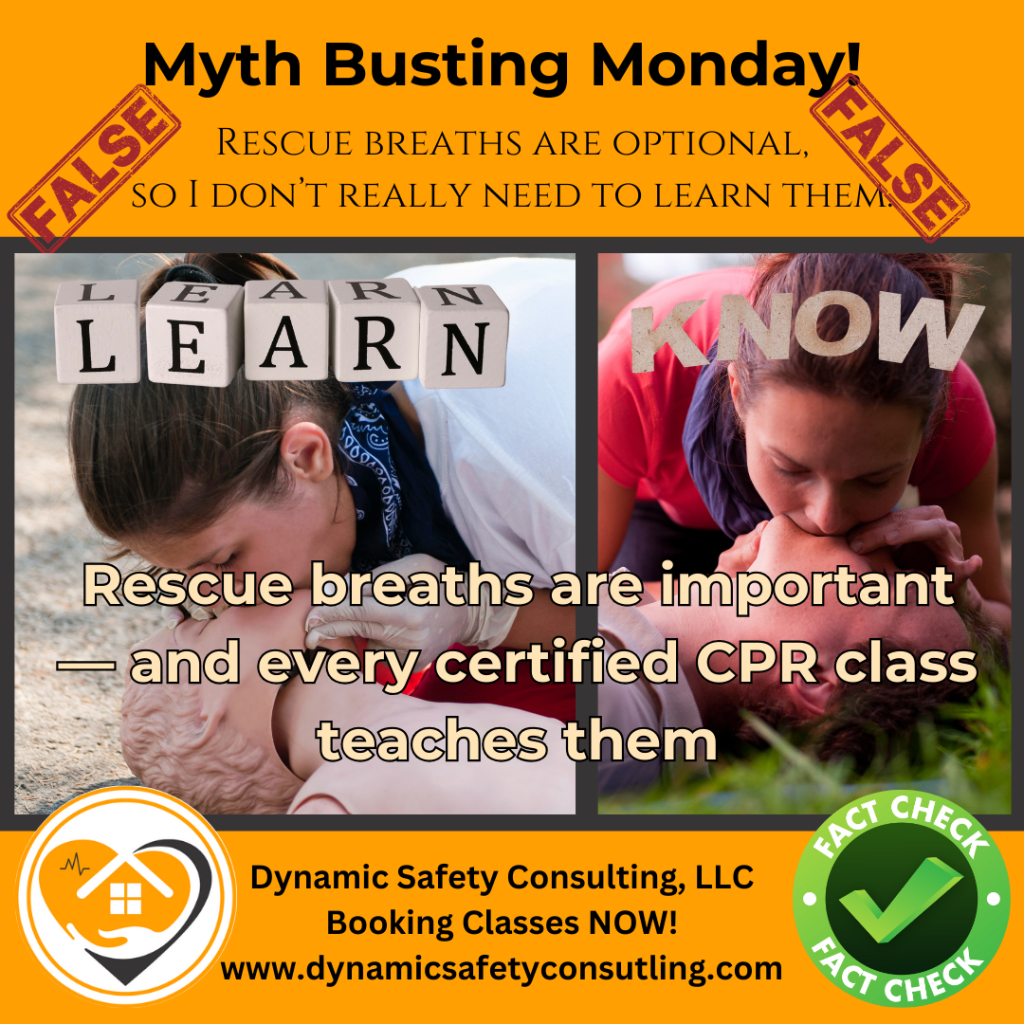
“Rescue breaths are optional, so I don’t really need to learn them.”
The Truth
Rescue breaths are important, and every certified CPR class teaches them. At the same time, you can still help in many emergencies even if you’re not fully confident with breathing techniques.
Here’s the key distinction:
- Hands-Only CPR (chest compressions only) is highly effective in many adult cardiac emergencies.
- Full CPR (compressions plus rescue breaths) is still vital in certain situations.
Both skills matter — and knowing when to use each one is what training provides.
Why CPR Guidelines Change
What many people don’t realize is that CPR guidelines are not static.
They change because of:
- New medical research
- Real-world outcome data
- Advances in emergency response science
That means what you learned years ago may no longer be best practice today.
This is why:
- Certifications are valid for 2 years, and
- You should take a CPR class at least every 6 years (more often is even better)
Retraining keeps your skills aligned with the most current, evidence-based methods.
When Rescue Breaths Matter Most
Rescue breaths play a critical role in situations such as:
- Drowning incidents
- Pediatric emergencies
- Overdoses
- Certain medical and respiratory conditions
In these cases:
- ❤️ Chest compressions keep blood circulating
- 🫁 Rescue breaths help deliver oxygen
- 🧠 Training helps you know which response is appropriate
Confidence comes from understanding the why, not just memorizing steps.
Why Ongoing Training Matters
CPR techniques taught ten years ago are not the same as those taught today. As research evolves, so does training — and our responsibility is to make sure you’re prepared with the most current information.
Training gives you:
- Clarity in stressful moments
- Confidence to take action
- Updated skills that match today’s science
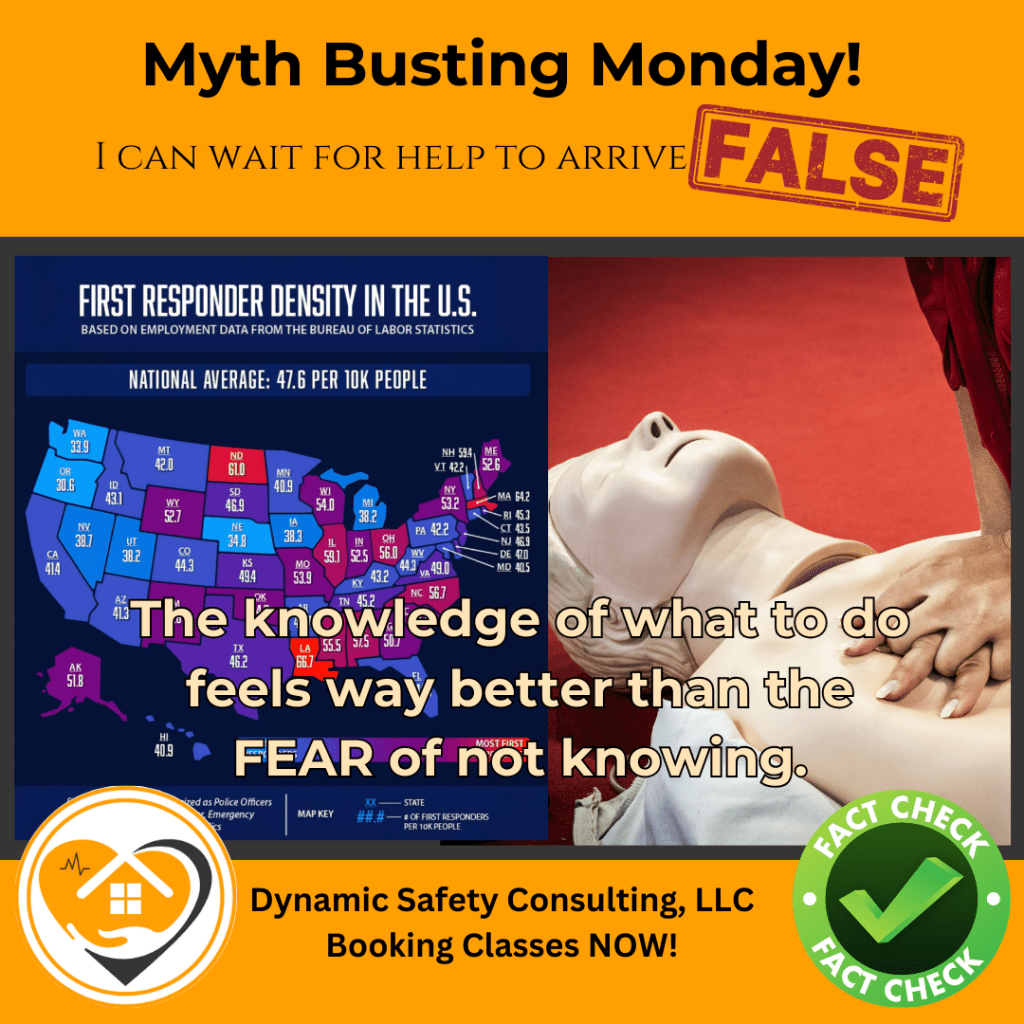
Most importantly, it prepares you to help before EMTs arrive, when those first minutes matter most.
Stay prepared. Stay informed. Stay ready.
If it’s been a while since your last CPR, AED, or First Aid class, now is a great time to refresh your skills and ensure you’re up to date.
Be ready before help arrives.
 Dynamic Safety Consulting
Leave a comment