AED & CPR Training Everett WA
When a cardiac emergency happens at work, the most important factor isn’t the size of the business or the industry—it’s how quickly help begins.
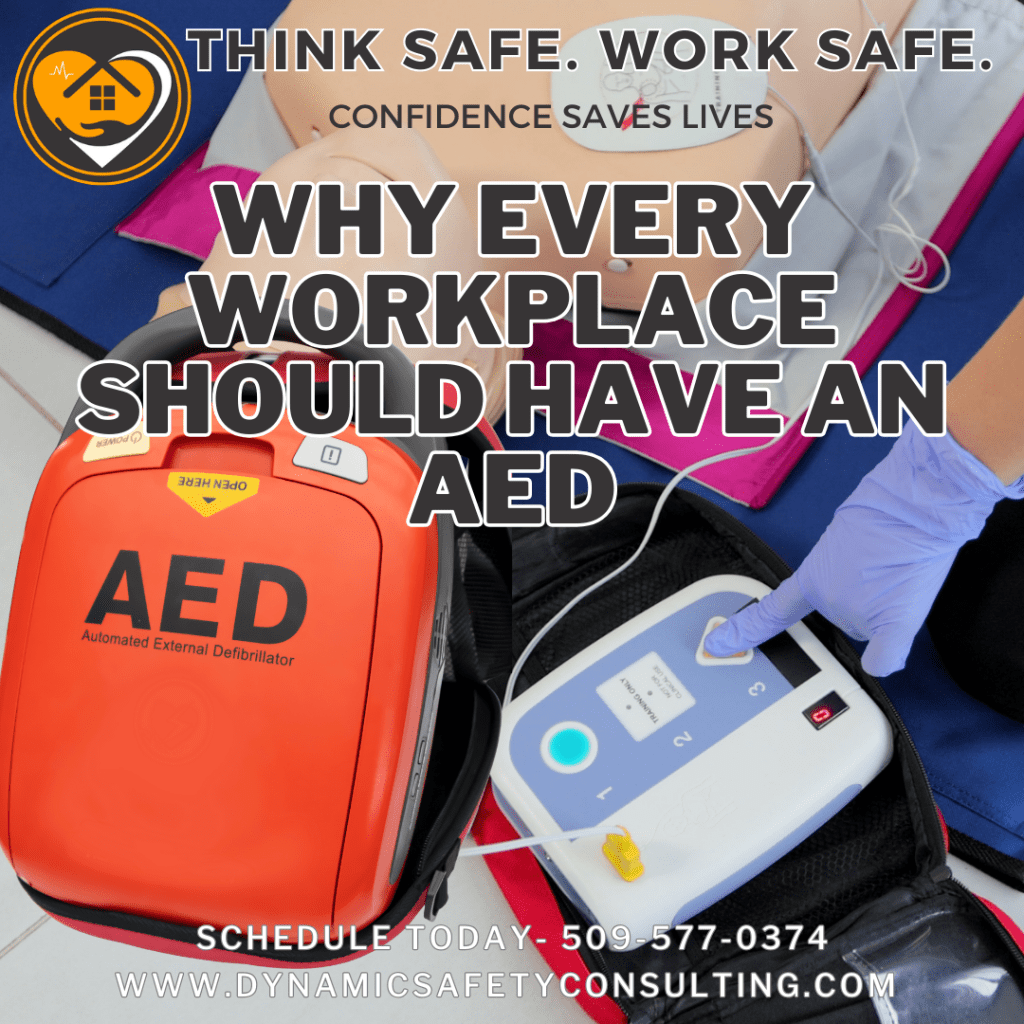
An Automated External Defibrillator (AED) is one of the most effective tools a workplace can have during sudden cardiac arrest. Yet many businesses either don’t have one, aren’t sure if they need one, or assume emergency responders will arrive in time.
Here’s why having an AED in the workplace matters—and why it goes hand-in-hand with CPR training.
Sudden Cardiac Arrest Can Happen Anywhere
Sudden cardiac arrest doesn’t only happen in hospitals or gyms.
It can occur:
- In offices
- On job sites
- In warehouses
- At schools and childcare centers
- In retail and public-facing spaces
If people spend time in your workplace, the possibility exists. Having an AED on-site means your team is prepared to respond immediately.
AEDs Are Designed for Everyday People
One common misconception is that AEDs are complicated or dangerous to use.
In reality:
- AEDs give clear, step-by-step voice instructions
- They will not deliver a shock unless it’s needed
- They are designed for use by non-medical responders
During CPR and AED training in Everett, WA, people often say the same thing afterward:
“I didn’t realize how simple this actually was.”
Time Is the Most Critical Factor
During sudden cardiac arrest:
- Survival rates decrease with every passing minute
- Early CPR helps circulate oxygen
- Early AED use can dramatically improve outcomes
Emergency response times—even locally—are measured in minutes. An AED allows your team to act before professional help arrives.
This is why AED access combined with CPR training is considered best practice for workplace safety.
AEDs Support Employee Confidence
When employees know an AED is available and understand how it works, panic decreases.
AEDs provide:
- Clear guidance during a stressful moment
- A sense of shared responsibility
- Confidence that help can begin immediately
This confidence is a key reason businesses choose workplace CPR and AED training in Everett, WA—it prepares teams emotionally as well as practically.
Some Workplaces Face Higher Risk
While every workplace benefits from AED access, it’s especially important for:
- Construction and industrial environments
- Manufacturing and warehouse facilities
- Fitness and wellness spaces
- Schools, childcare, and youth programs
- Businesses with steady public traffic
In these settings, preparedness isn’t optional—it’s responsible leadership.
Having an AED Sends a Clear Message
Providing an AED isn’t just about equipment—it’s about culture.
It says:
- We value people over productivity
- We’re prepared for the unexpected
- We care about our team and our community
That message builds trust internally and externally.
AEDs Work Best When Paired With Training
An AED is most effective when people are trained to:
- Recognize cardiac arrest
- Begin CPR immediately
- Retrieve and use the AED confidently
- Coordinate while emergency services are on the way
This is why many businesses choose CPR and AED training in Everett, WA together—it ensures tools and people work in sync.
The Bottom Line
Every workplace that serves people should be prepared to protect them.
An AED doesn’t replace emergency services—it bridges the gap until help arrives. Combined with CPR training, it gives teams the confidence to act when every second counts.
Prepared workplaces don’t panic.
They respond.
Ready to Learn More?
If you’re unsure whether your workplace should have an AED—or how to train your team to use one—local, hands-on CPR and AED training can help you make the right choice for your space.
 Dynamic Safety Consulting
Leave a comment